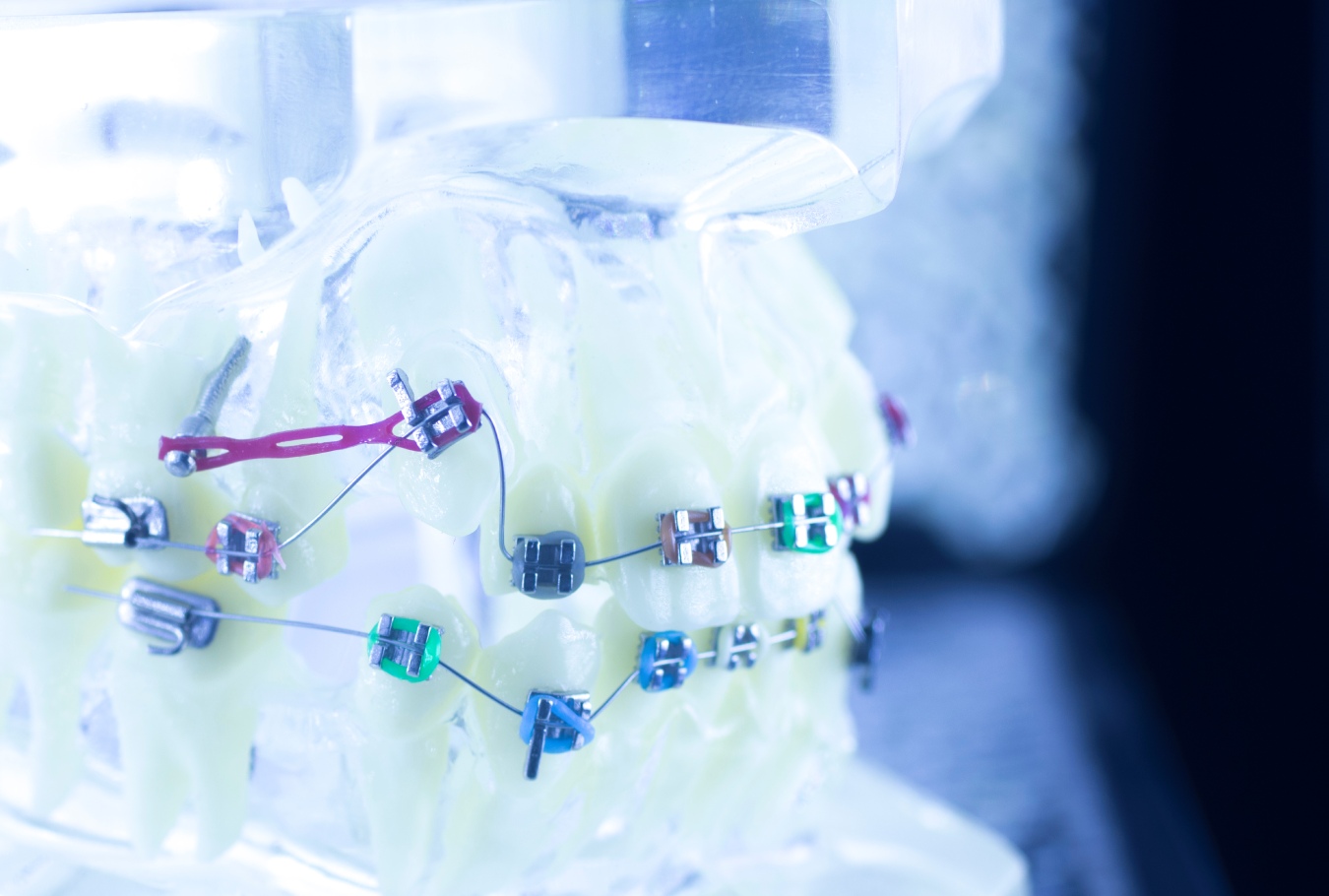
Types of Braces
Braces are still the most proven way to move teeth — and they’ve come a long way from what you might remember. Whether you’re here for your kid, yourself, or somewhere in between, here’s what to expect.
Braces work. They’re the most time-tested tool in orthodontics, and they handle everything from a little crowding to complex bite correction with a level of control other options can’t match. At Vibe, Dr. Zegarowski places and adjusts every set of braces personally, so your treatment is guided by the same eyes and the same plan from the first wire to the last.
We offer two options. Both are equally effective. The difference is how they look.
Metal Braces
Metal braces are the classic for a reason. Small, durable brackets and a wire do the work, moving your teeth with steady, predictable pressure over time. Today’s brackets are smaller and more comfortable than the ones from a decade or two ago, but the mechanics behind them are just as reliable.
They’re also the most durable option on the table, which makes them a smart pick for kids, active teens, or anyone whose day-to-day isn’t especially gentle on a dental appliance. And if you want to have a little fun with it, colored bands are always an option — or keep it classic with clear ones.
Ceramic Braces
Ceramic braces do the same job as metal, with tooth-colored brackets that blend into your smile instead of standing out against it. If you’d rather people notice your smile getting straighter than notice the hardware doing it, this is the option.
They move teeth just as effectively as metal braces — nothing about the treatment itself changes. It’s simply a quieter way to get there, which is why it’s popular with teens and adults who want a lower-profile experience day to day.
Not sure which is right for you? That’s what your consultation is for. We’ll look at your case, your lifestyle, and what matters most to you, and give you a straight answer — not whichever option is easiest for us.

Braces For Kids
The earlier we catch something, the simpler it usually is to fix. That’s why we recommend a first orthodontic check-in by age seven — not because every seven-year-old needs braces, but because that’s when we can spot how the jaw and bite are developing while there’s still room to guide it.
For kids, braces are often about more than straight teeth today. Dr. Zegarowski is watching how permanent teeth are coming in and whether early treatment now can prevent something bigger down the road. Sometimes that means a phase of early guidance before braces even start.
We also know kids remember how they were treated more than what was said. Visits are quick, we talk to them directly instead of over their heads, and we make sure their first experience in the chair is one that makes the next one easier — not something to dread.

Braces For Teens
The teen years are when most orthodontic treatment happens, and for good reason — a still-growing jaw gives us more to work with, whether that’s routine spacing or a more involved bite correction. Braces remain the most effective tool for covering that whole range.
We treat teens like they can handle knowing what’s going on with their own treatment, because they can. Dr. Zegarowski walks through what’s happening at each visit and what’s coming next, and patients who understand their treatment tend to stick with it better — which means better results.
If the visibility of metal braces is a real concern, ceramic is on the table, and we’ll talk through what fits their case and their life — sports, instruments, all of it — so treatment doesn’t become the main character of high school.

Braces For Adults
More adults are in braces today than ever, and there’s a good reason for that: it’s never too late for a smile you’re confident in. Whether you skipped treatment as a kid or your teeth have shifted with time, the options today are built for someone with a full schedule and zero interest in looking like a teenager again.
Adult cases can carry a bit more complexity — teeth that have held their position for decades, old dental work to account for, or a bite that’s drifted gradually enough that you almost didn’t notice. Dr. Zegarowski has the experience to work with that complexity and coordinate with other specialists when a case calls for it.
Your consultation is where this gets real. We’ll look at your records, tell you honestly what treatment would involve, and help you decide what actually fits your life — not just your smile.